Buying guide · 9 min read
Under Construction or Ready to Move: Choosing in Chennai
Pay in stages for a promise, or pay in full for a finished home. How GST, rent, risk and choice tilt the decision between the two in Chennai.
24-Sep-2026
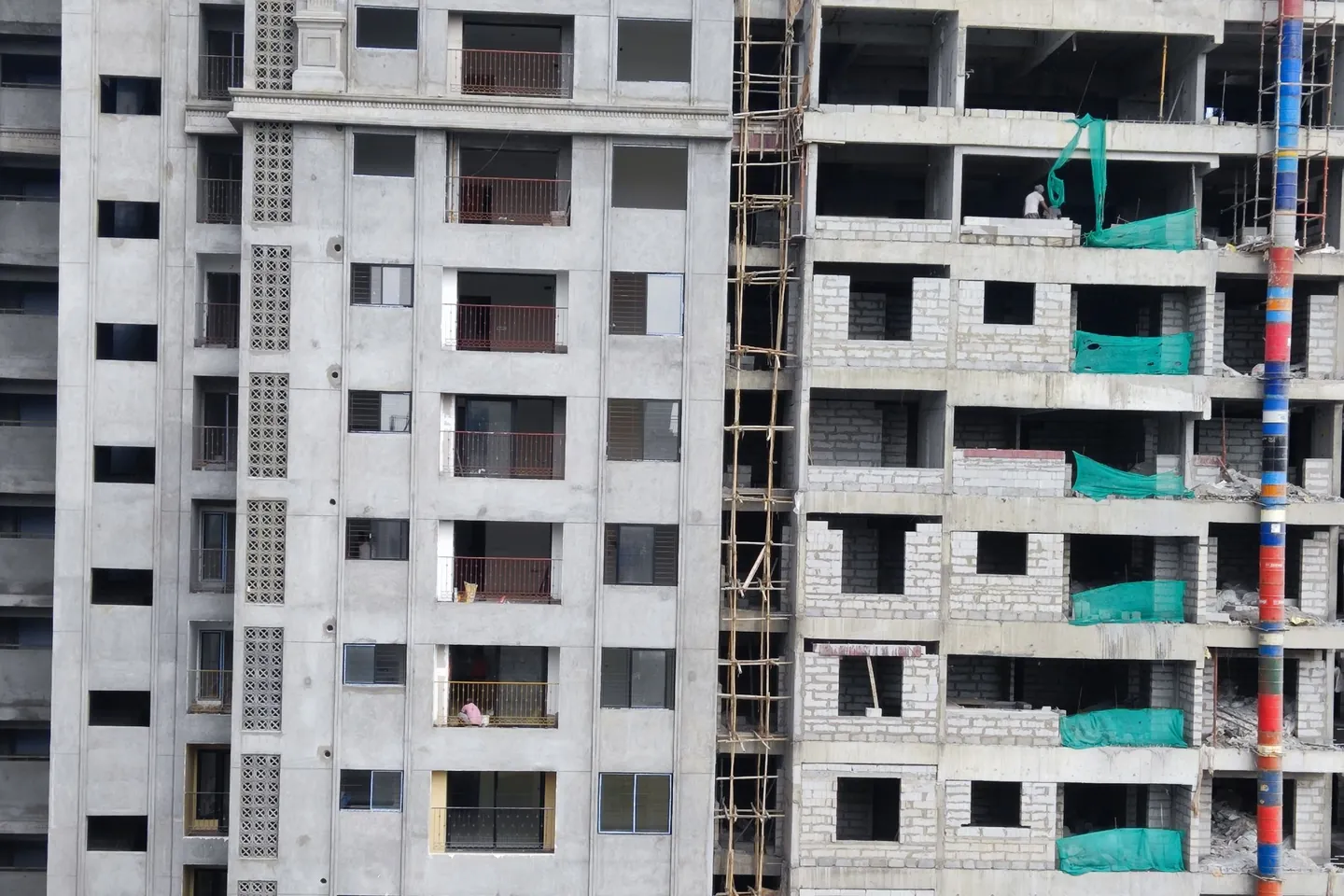
Every home buyer in Chennai eventually stands in front of the same fork. On one side, a show flat in a sales office beside a site with a crane on it, a payment plan stretched over three years and a handover date printed in confident type. On the other, a finished flat with real neighbours, a working lift and a price that wants paying now.
One is a promise. The other is a fact. The promise is usually cheaper. The fact is usually dearer. And which is the better buy depends far less on the flats than on the person standing at the fork.
What is the real difference?
When you buy under construction, you are buying the right to a flat that does not yet exist, from a developer who has promised to finish it by a date, to a specification, on a plan. You pay in stages, and the risk that something goes wrong between now and the keys is partly yours.
When you buy ready to move, you are buying a flat that exists, in a building with a completion certificate, from a developer finishing its sales or from an owner selling on. You pay most of the price at once, and what you see is what you get.
Both are legitimate. Both are sold with enthusiasm. Here is how we weigh them.
The money: price, GST and the cost of waiting
Under-construction flats are often priced below comparable ready ones, because the buyer carries the wait and the risk. Early buyers in a project also tend to get the best choice of floors, views and orientations, and sometimes launch pricing on top.
Then there is GST. At the time of writing, GST applies to under-construction residential property at 5 per cent of the price, without input tax credit, or 1 per cent for flats that qualify as affordable housing – in a metro like Chennai, a carpet area of up to 60 square metres and a value of up to ₹45 lakh. A flat sold after its completion certificate has been issued carries no GST at all.
So the under-construction discount has to be weighed against the GST you pay on it. Sometimes the discount wins comfortably. Sometimes the two very nearly cancel out.
The third piece is the cost of waiting. If you are renting today, every month between booking and handover is a month of rent on top of your instalments, or of pre-EMI interest if you have taken a loan that disburses with construction. Over two or three years, that is not a rounding error. A ready flat stops the rent the month you move in.
And if you are buying to let, the same arithmetic runs the other way: a ready flat starts earning rent almost at once, while an under-construction one earns nothing until handover.
The risk: what can go wrong, and what RERA does about it
The classic risk with an under-construction purchase is delay. Before RERA, it was common and often open-ended. Today, a registered project has a declared completion date on record, and if the developer misses the date in your agreement, you have a choice: withdraw and get your money back with interest, or stay and be paid interest for every month of delay.
That is a real remedy, and it has changed developer behaviour. But interest is not a home. A family that has given notice on its rental and planned a school admission around a handover date will not be made whole by a cheque.
The other risks are subtler. The specification can drift, though RERA bars changes to your apartment's sanctioned plan and specifications without your consent. The finish can disappoint, though RERA gives you five years to have defects fixed. And the area delivered can differ from the area agreed, which is why it is worth understanding carpet, built-up and super built-up area before you sign.
The best protection is a developer with a record of finishing on time and a project page that shows it. We have written about reading a TNRERA project page; for an under-construction purchase, the quarterly progress updates are the part to read most closely.
The certainty: what you can only check on a finished flat
A ready flat lets you check everything a brochure cannot show you.
Light. Stand in the living room at four in the afternoon and see whether you need the lights on.
Ventilation. Open the windows and see whether the breeze has anywhere to go.
Water. Run the taps on the top floor and check the pressure; ask what the source is and what the tanker bill looked like last summer.
Noise. Listen for the highway, the neighbour's generator and the lift machinery.
Maintenance. Walk the corridors, the basement and the terrace. A building that is three years old and already tired is telling you how the association works.
Neighbours. They exist. Talk to one.
None of these is visible from a show flat, however beautifully it has been lit.
Choice and timing
Under construction gives you choice: the floor, the facing, the view, sometimes the layout. In a popular project, the best units go early, and buying at launch is the only way to get them.
Ready to move gives you timing: you know the date because it is today. For a family relocating to Chennai for a job, a buyer whose lease ends in March, or a parent who needs to move closer to a hospital, that certainty can be worth more than any discount.
The developer is half the decision
For an under-construction purchase, you are not really choosing a flat. You are choosing the people who will build it.
Visit a project the same developer finished three or four years ago. Ask the residents whether it was delivered on time, whether the flat matched the brochure, and how long the developer took to fix what was wrong. Look at the TNRERA pages of their other projects and see whether the quarterly updates were kept up. A developer's past handovers are the best forecast you will get of yours.
For a ready flat, the developer still matters, but differently. The question is no longer whether they will finish. It is how well they built what they finished, which is visible in the walls, the plumbing and the way the building has aged.
How the loan behaves
The two kinds of purchase also behave differently on a home loan.
On an under-construction flat, the bank disburses in stages as the developer raises demands against construction milestones. Until the full loan is disbursed, many borrowers pay only the interest on what has been drawn, the pre-EMI, and full EMIs begin later. That eases the early years, but it also means you are paying interest for a home you cannot yet live in.
On a ready flat, the loan is disbursed more or less in one go, and full EMIs begin almost at once.
How the interest is treated for income tax depends on the regime you file under and whether the property is complete, and the rules have shifted over the years. Ask your chartered accountant before you count a tax deduction as part of the plan.
Who should buy which?
Take two hypothetical buyers.
Suresh and Anitha are both in their early thirties, renting in Velachery, with a toddler and steady jobs on OMR. They have time on their side and would rather pay less and choose their floor. An under-construction flat in a well-run project in Navalur or Thalambur, from a developer with a strong record, suits them – provided their rent and instalments together fit comfortably in their budget until handover.
Mr and Mrs Krishnan are retiring next year, moving from Coimbatore to be near their daughter in Tambaram. They want to inspect the water pressure, meet the association and move in by summer. A ready flat suits them, and the absence of GST softens the higher price.
Both made the right choice. They made different ones.
What handover day actually involves
For an under-construction purchase, the day you have waited three years for deserves more care than it usually gets.
Before you accept the keys, inspect the flat thoroughly: every tap, every switch, every door and window, the slope of the bathroom floors, the finish of the walls, the fixtures promised in the agreement. Write down everything that is wrong, with photographs, and hand the list to the developer in writing. That list is your record for the five-year defect liability RERA gives you.
Check that the building has its completion or occupancy certificate, as applicable. Possession of a flat in a building without one is possession of a problem.
Read the possession letter before you sign it. Some letters ask you to confirm that the flat has been received in perfect condition. If it has not, say so in writing.
Find out when the maintenance charges begin, how the owners' association will be formed, and when the developer will execute the conveyance in your favour and hand over the common areas.
A ready flat skips most of this, because you inspected it before you bought it. That is rather the point.
A middle path
There is a third option people often overlook: a project nearing completion. The structure is up, the risk of a long delay has narrowed, the finishes can be seen in the units already done, and the developer is keen to close sales before handover. It does not offer the full launch discount or the full certainty of a finished building, but for many buyers it is the balance point.
And there is the resale market, which offers ready homes in established neighbourhoods, often in places where no new projects are being built. It has its own paperwork, which we cover in buying a resale flat in Chennai.
For NRIs, one extra question
If you are buying from abroad, an under-construction flat needs somebody to watch it: to read the progress updates, chase the developer and inspect at handover. A ready flat needs somebody to let it and look after it. Either way, decide who that person is before you decide which flat. Our note on NRI paperwork covers the rest.
A checklist for each side
If you are buying under construction:
Check the TNRERA registration, the declared completion date and the last few quarterly updates.
Check the developer's record on its previous projects: did they finish on time, and are the residents happy?
Work out the total cost of the wait: rent or pre-EMI, month by month, until the declared date, plus six months.
Compare the price including GST with the price of a comparable ready flat.
Read the agreement's clauses on delay, specification changes and area variation.
If you are buying ready to move:
Check the completion certificate, and for a resale, the full title chain.
Visit at different times of day, and once in the rain if you can.
Meet the association and ask about maintenance charges, the corpus fund and any pending repairs.
Check the water source, the power backup and the parking allotment in writing.
Compare the price with the under-construction alternatives nearby, including their GST and the cost of waiting.
The fork, revisited
The right answer to under construction or ready is rarely about the flat. It is about your rent, your calendar, your appetite for risk and how much you want to choose versus how much you want to know. Approach it with equanimity rather than urgency, and the fork tends to choose itself.
What it should never be is a decision made in the sales office on the day of the visit, because a launch offer expires on Sunday. Offers come back. The wrong flat stays.
Our job is to put both sides in front of you honestly, with the arithmetic done. If you are standing at the fork now, browse what is open across Chennai, or tell us your timeline and we will show you the best of both roads that fits it.